If you lead SEO, this is the moment to decide which GEO tool to buy, at what price, and who will run it.
What is a GEO tool—and how is it different from SEO tools?
One-line definition: a GEO (Generative Engine Optimization) tool measures and improves how often your brand is cited inside answers generated by AI search engines such as ChatGPT, Perplexity, and Gemini.
Clarifying three related concepts makes tool selection much sharper.
| Concept | Goal | Metrics |
|---|---|---|
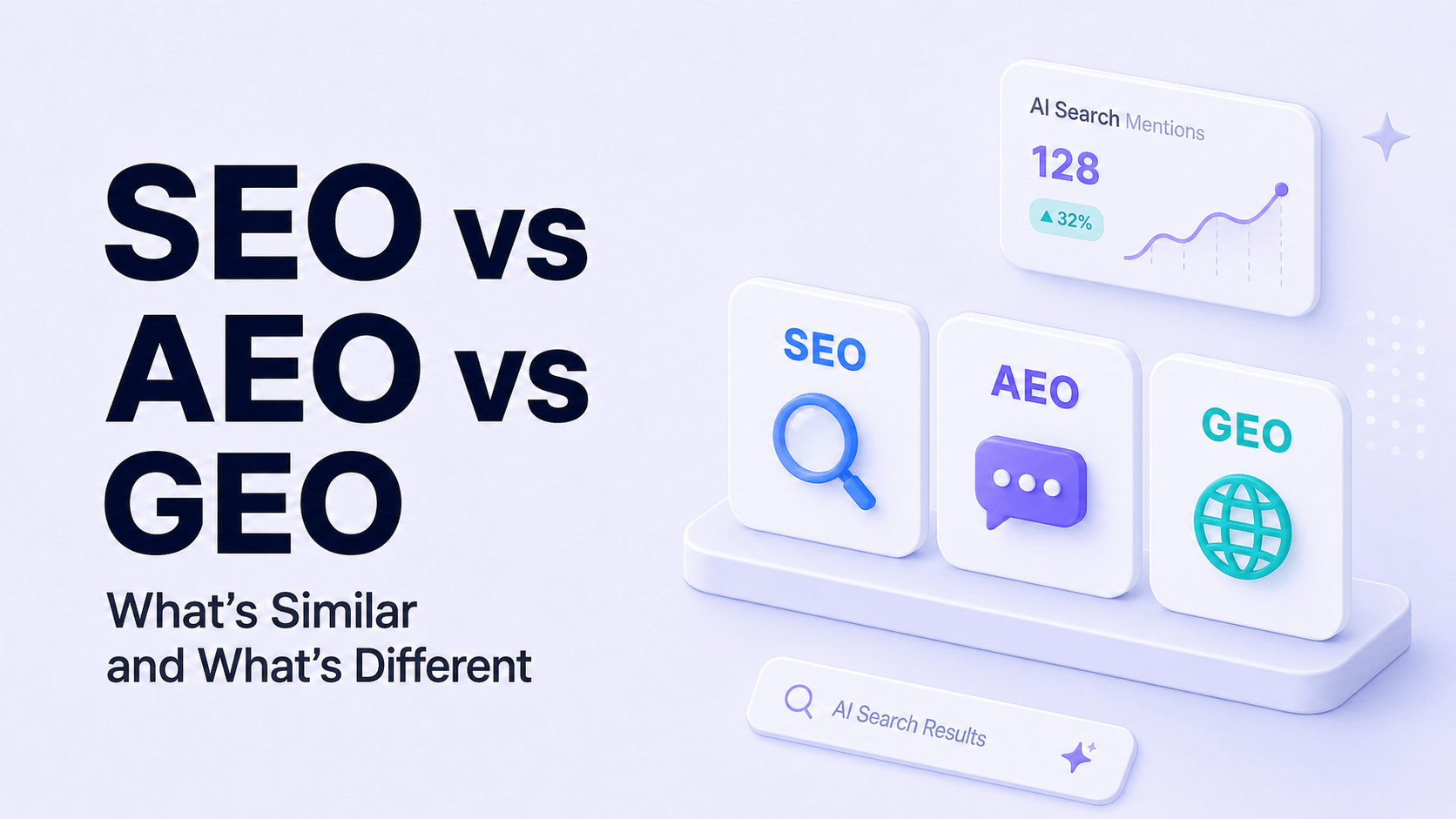
| SEO | Optimize link rankings in search results | Keyword rank, CTR |
| AEO | Win answer boxes / featured snippets | Snippet wins |
| GEO | Earn brand citations inside AI-generated answers | AI Visibility Score, citation frequency |
GEO tools typically track four core metrics.
- AI Visibility Score: overall brand exposure inside AI answers
- Brand citation frequency: how often AI mentions your brand in a period
- Prompt-level placement: where your brand appears by question type
- Share of Voice: your brand’s share of AI answers vs competitors in the same category
Buying rule of thumb: under ~10 monthly published pieces, manual checks can still work. Above that, tool cost usually beats labor cost.
2026 GEO tools: a practical comparison of 10 options
Selection criteria: AI platform coverage, Korean-language support, price transparency, and team-size fit.
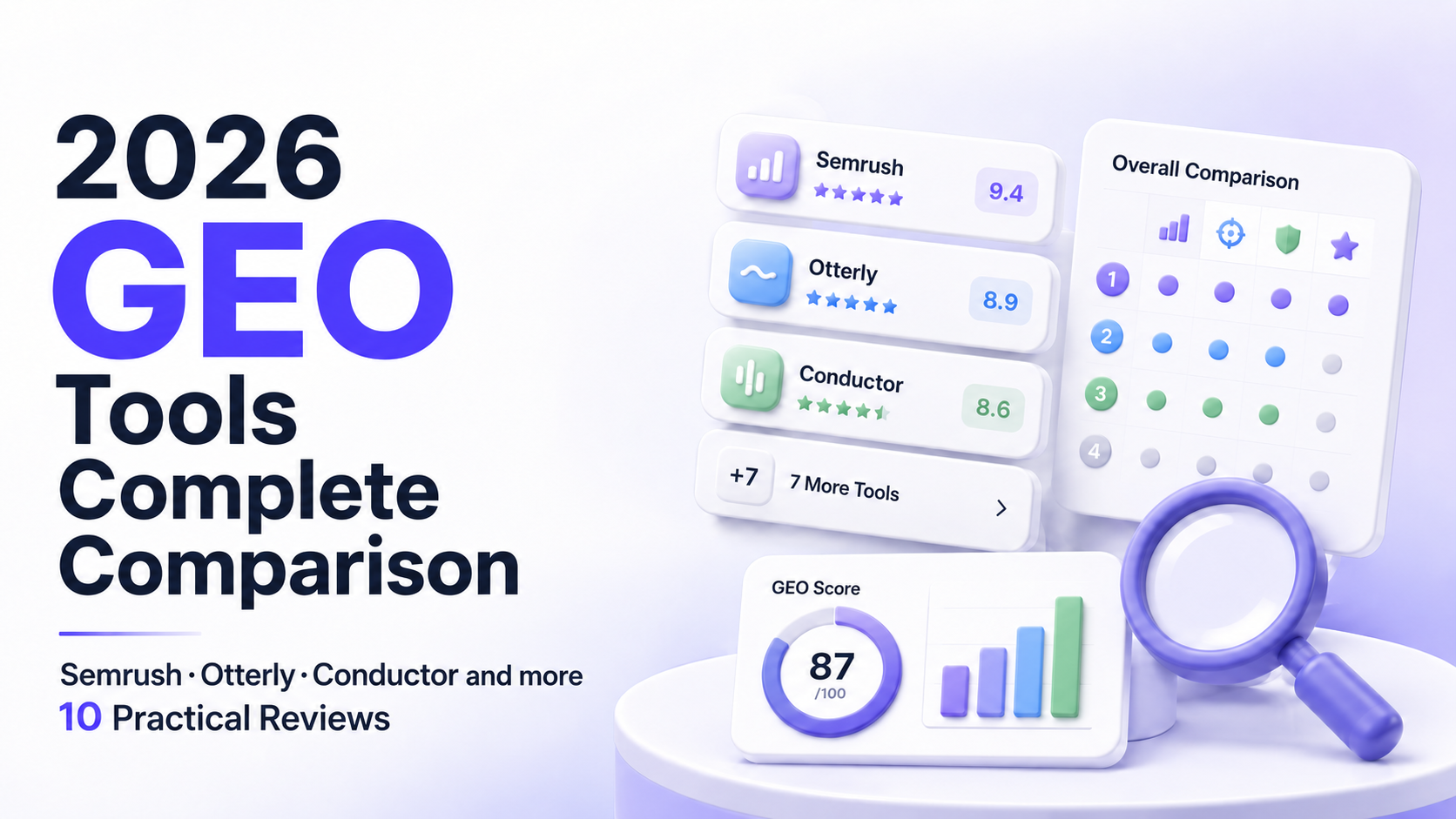
Semrush — the SEO+GEO integrated default
Semrush extended Brand Monitoring and Position Tracking into GEO via its AI Toolkit. Existing subscribers can often access some GEO data without a new stack—that is the biggest advantage.
Best for
- Teams of 5+ who want SEO and GEO in one dashboard
- Teams already on Semrush who want low onboarding cost
Not ideal for
- Teams whose primary need is deep prompt-level analysis (dedicated tools go deeper)
From: $139/mo
Otterly — prompt-level AI visibility tracking
Otterly tracks whether ChatGPT, Perplexity, and Gemini mention your brand for specific prompts, and includes competitive Share of Voice reporting. From about $49/mo, it has one of the lowest entry barriers among GEO-native tools.
The limitation is clear: Korean prompt support is uncertain, so Korea-focused teams usually use it for English prompts and pair a local tool when Korean citations matter.
From: $49/mo
Conductor — enterprise GEO platform
Conductor combines Content Guidance with AI Visibility in a marketer-friendly UI, including approval workflows. In 50+ person orgs where content and SEO teams are separate, collaboration gains are usually largest.
For SMBs, both feature set and price are often overkill. Always ask for a POC before buying.
Pricing: custom
Tools 4–10 at a glance
| Tool | AI coverage | Korean | From | Best size | Strength |
|---|---|---|---|---|---|
| Ahrefs AI Rank Tracker | Multi-AI | Partial | Included in plan | SMB–Enterprise | SEO extensibility |
| Moz AI Visibility | Multi-AI | No | $99+ | SMB | Price accessibility |
| BrightEdge | Multi-AI | No | Custom | Enterprise | AI automation |
| Authoritas | Multi-AI | No | Custom | Agency | Client reporting |
| Brandwatch | Social + AI | Partial | Custom | Enterprise | Social integration |
| Chainsift | Includes KR AI | Yes | Custom | KR SMB–mid | Korean-language focus |
| ContentCube GEO | Includes KR AI | Yes | Custom | KR mid-market | CMS integration |
English roundups usually miss this: if you need Korean prompt citation tracking, put Chainsift and ContentCube GEO on the shortlist. As of 2026, global tools still barely track Korean AI citations directly.
Recommendations by team size
Solo marketers & startups (under ~$100/mo)
You can start without a paid tool.
When the routine below becomes painful, that is usually the right time for Otterly’s starter plan.
Free starter routine
- Pick 20 core prompts (e.g. “Recommend the best [category] in Korea”)
- Manually check ChatGPT and Perplexity once a week
- Log citation presence, placement, and competitor mentions in a spreadsheet
SMB teams (3–10 people, ~$200–500/mo)
Concentrate on Semrush or Otterly Pro alone. Multiple tools usually scatter data and raise ops cost. Keep it simple.
- Start with the existing SEO owner spending ~4 hours/week on GEO
- If Korea is 50%+ of the audience, evaluate a local tool (e.g. Chainsift) in parallel
- ROI baseline: separate chatgpt.com and perplexity.ai referrers in GA4 and watch AI-sourced traffic
Enterprise & agencies ($1,000+/mo)
Center on Conductor or BrightEdge, then add Brandwatch as a social monitoring layer.
ROI formula
GEO ROI = (AI traffic lift × conversion rate × AOV) ÷ GEO tool monthly costStart by isolating AI platform referrers in GA4. Without that data, GEO spend is hard to justify to leadership.
Decide these three things before the tool
The core frame of this article, in three lines:
- 1GEO is separate from SEO. Ranking #1 does not guarantee AI citations.
- 2Past ~10 monthly content pieces, you usually need a tool. Manual tracking breaks sooner than teams expect.
- 3If you need Korean citation tracking, local tools are effectively the only real option. Global Korean support is still weak in 2026.
Next step: before buying a tracker, check whether your content is structured to be citable by AI. The best tracking tool is useless if there is nothing worth citing.
Frequently asked questions
Q1. What is a GEO tool, and how is it different from SEO tools?
A GEO tool measures and improves how often your brand is cited inside AI-generated answers from engines like ChatGPT, Perplexity, and Gemini. SEO optimizes link rankings; GEO optimizes brand presence inside generated answers.
Q2. Do solo marketers and startups need a GEO tool?
If you publish fewer than about 10 pieces a month, a manual routine can work. Pick 20 core prompts, check ChatGPT and Perplexity weekly, and log citations in a spreadsheet. When that becomes painful, a starter plan like Otterly is the usual next step.
Q3. Which tools track Korean-language AI citations?
As of 2026, global tools still barely track Korean prompt citations. If Korean tracking matters, local options such as Chainsift and ContentCube GEO are the realistic candidates.
Q4. At what content volume do you need a GEO tool?
Once monthly publishing passes roughly 10 pieces, tool cost often undercuts the labor of manual tracking. Manual limits arrive sooner than most teams expect.