Search is choosing "real experience"
In July 2026, the keyword mentioned most in the global SEO community was E-E-A-T (Experience, Expertise, Authoritativeness, Trust). Google no longer favors posts packed with keywords—it judges who the author is, whether they experienced it firsthand, and whether there is evidence and use cases.
What this means for small businesses
Stories from the owner about your own business rank higher than cookie-cutter posts from content agencies.
When someone searches "best dermatology clinic downtown," AI references not paid reviews but blog posts where the doctor explains treatment experience directly. Content with concrete experience—"this treatment worked well for this skin type"—gets cited by AI crawlers.
Alleo's interview-based content generation is built for this shift. We ask a few questions, then create content with live E-E-A-T signals from your answers. Pure AI-generated posts lack experience signals and cite poorly; interview-based content is different.
AI answers + traditional search: you need a "dual layer" strategy
The biggest change in the 2026 search landscape is that results now split into two layers.
Layer 1: AI answers
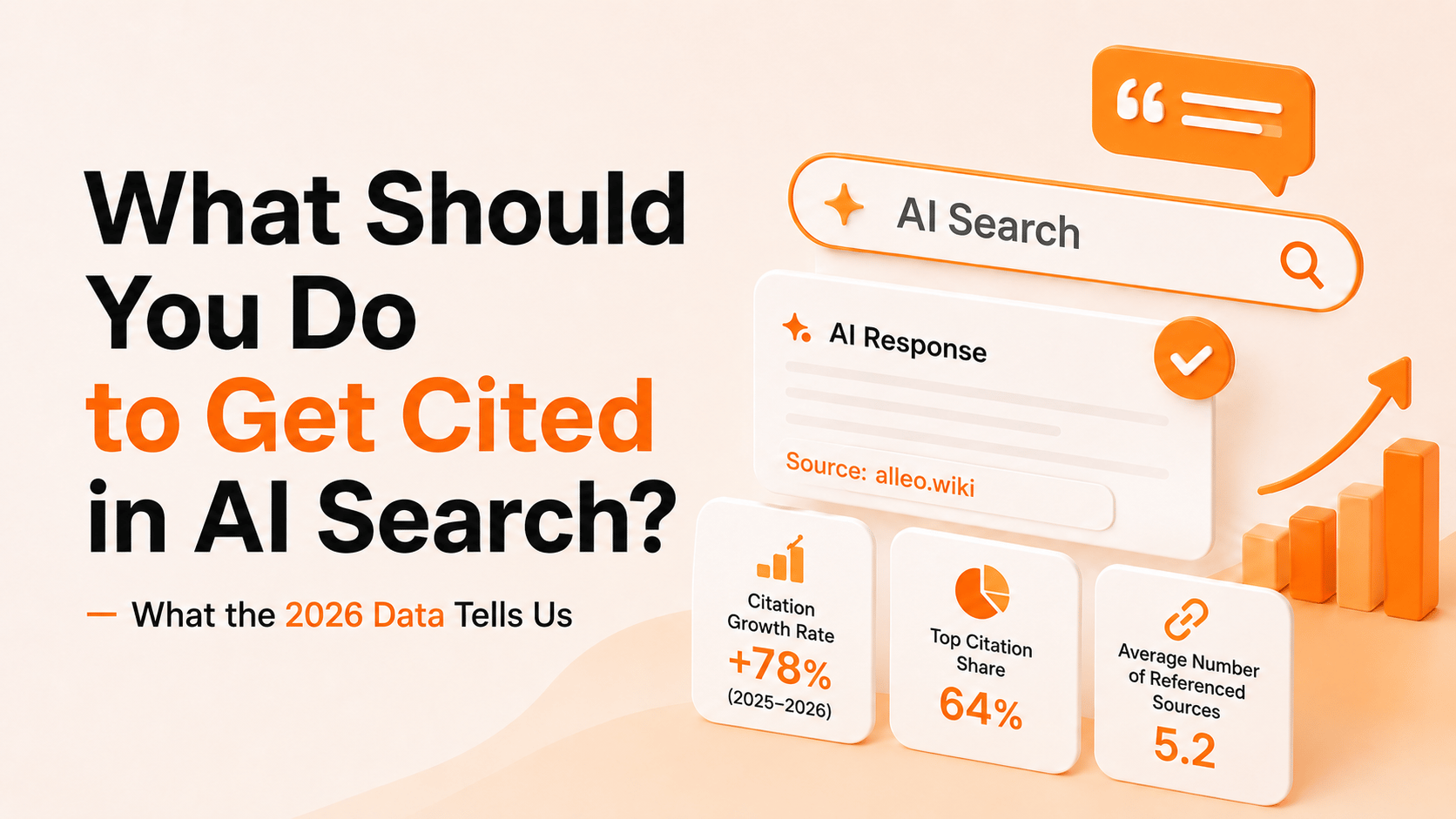
AI answers directly in AI Overview, ChatGPT, Perplexity, etc., citing sources
Layer 2: Traditional search
Exposure through classic Google search rankings (blue links)
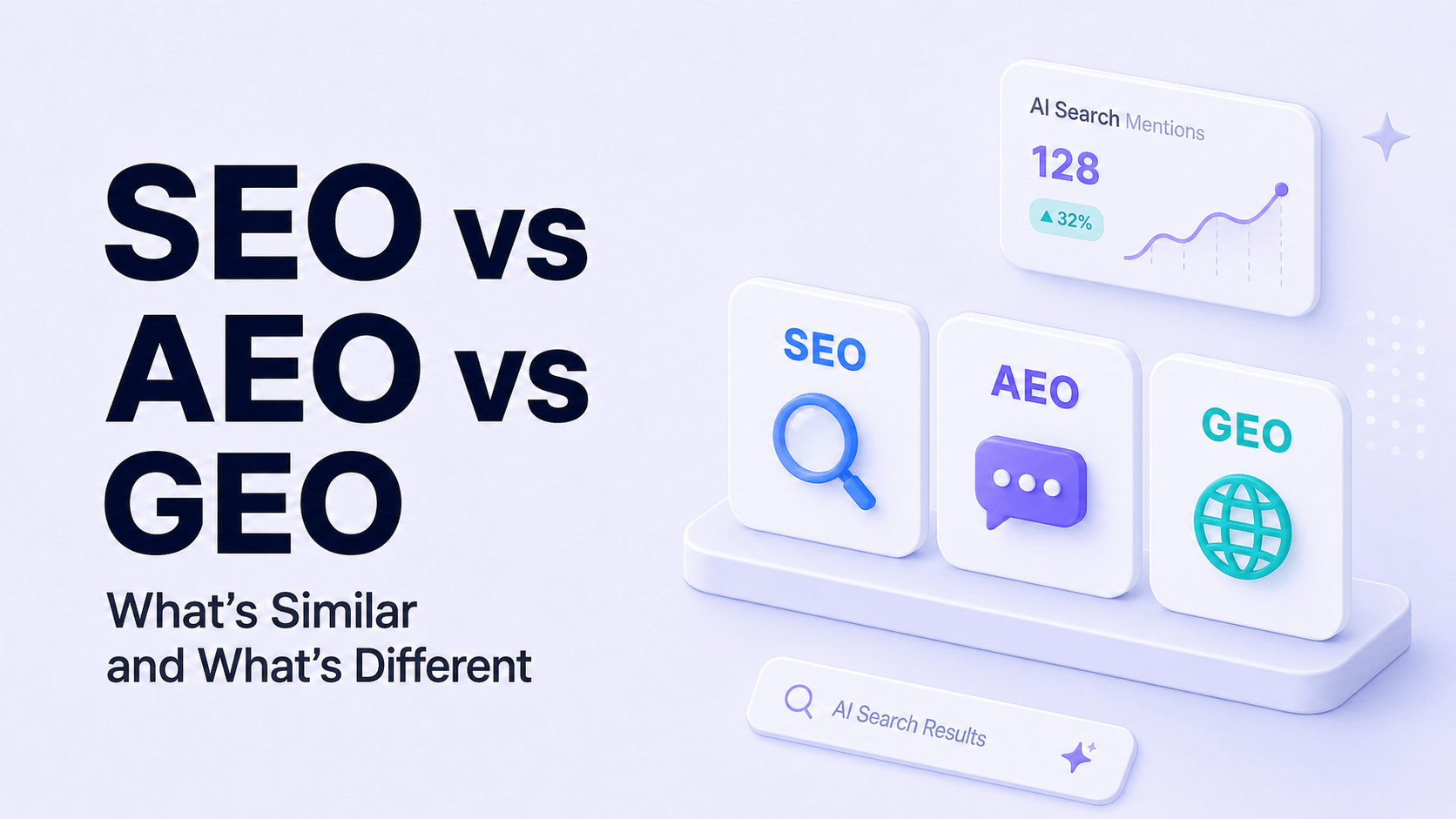
You need both. To get your brand cited in AI answers, optimize from AEO (Answer Engine Optimization) and GEO (Generative Engine Optimization) perspectives. Traditional SEO still matters for classic search rankings.
What small businesses can do
To become "the shop AI recommends," your homepage and blog must be in a structure AI crawlers can read. Important fact: many AI crawlers do not run JavaScript. No matter how polished the design, if AI cannot read it, you are out of recommendations.
Alleo's homepage AI comprehensive diagnosis checks your site from SEO, GEO, and AEO angles at once. We tell you whether AI crawlers read your site correctly and what to fix for AI answer citations.
Curious how SEO, AEO, and GEO differ? Read our SEO vs AEO vs GEO article too.
Technical site health is still the foundation
No matter how trends shift, one thing stays constant: crawling → rendering → indexing technical health.
Crawling
Can search engine bots visit my site?
Rendering
Can they read the pages they visit properly?
Indexing
Is the content registered in search listings?
If any of these three steps is blocked, great content still won't appear in search. As of July 2026, sites with shaky fundamentals keep losing visibility.
Is my homepage okay?
Most small business homepages never get a technical check after launch. Alleo's homepage AI comprehensive diagnosisshows crawling, rendering, indexing, keyword analysis, and competitor comparison at a glance. No homepage yet? Kroffle's affordable small business homepage service builds sites with SEO/AEO applied from day one.
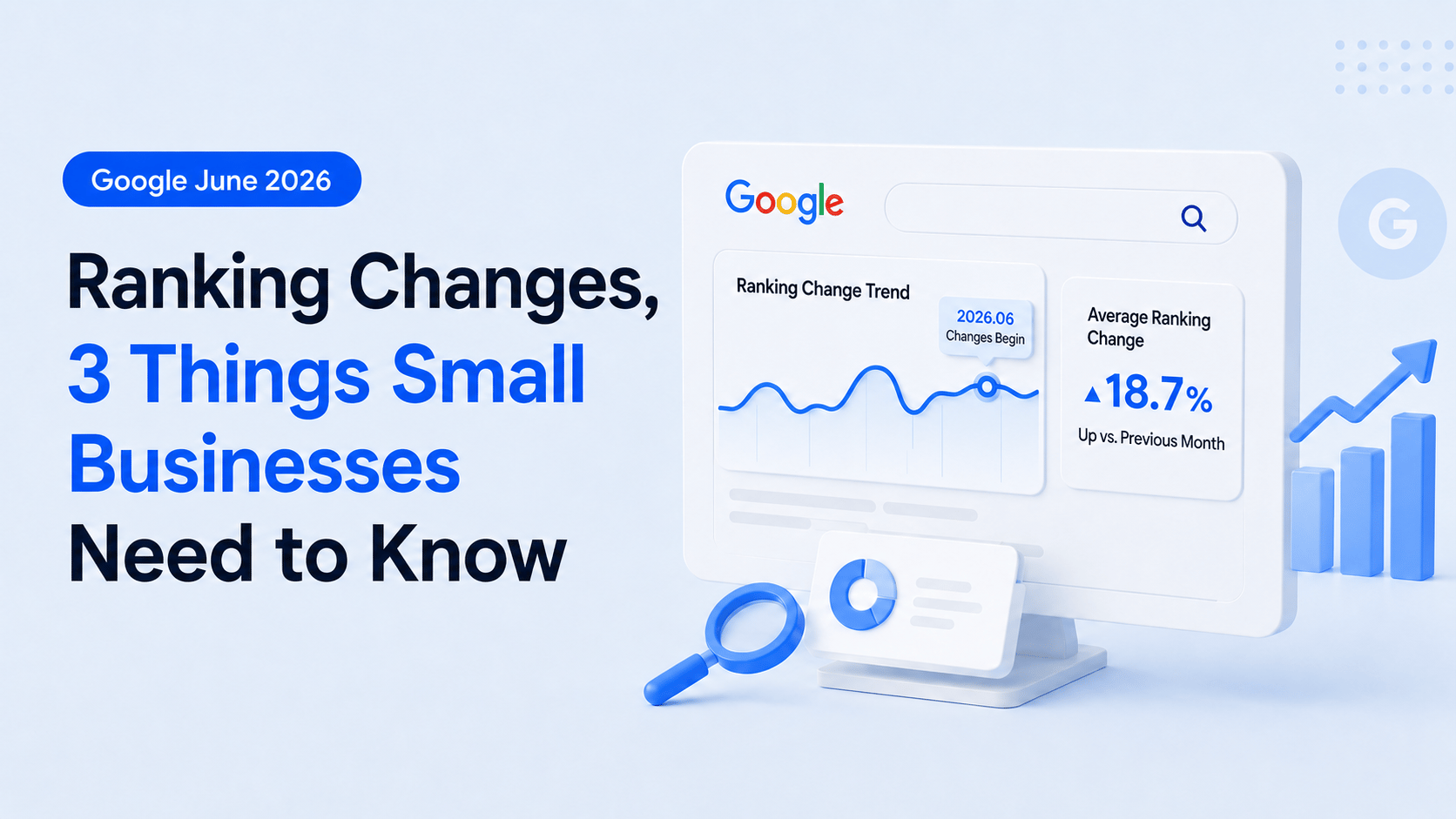
Local SEO is shifting to a "smaller radius"
The most direct change for small businesses: local SEO is moving toward tighter radius-based exposure.
Where "best restaurants in downtown" used to show results for a whole district, results now favor businesses within a few hundred meters of the user's current location.
What this means
- You are more likely to show up to customers right near your store.
- Without accurate location info and local keywords on your site, nearby customers may not see you either.
- Google Business Profile management matters more than ever.
Naturally include specific location contextin your blog—e.g., "We're a 2-minute walk from Main Street Station, Exit 3." AlleoAI's blog with SEO/GEO/AEO applied weaves local keywords and location signals into content naturally.
Summary: July 2026 SEO checklist for small businesses
| Change | Action | How Alleo helps |
|---|---|---|
| Strengthen E-E-A-T | Create content with the owner's real experience | Interview-based automated content generation |
| AI + search dual layer | Audit your site from AEO/GEO perspectives | Homepage AI comprehensive diagnosis |
| Technical health | Check crawling, rendering, and indexing status | AI comprehensive diagnosis + affordable homepage build |
| Tighter local SEO radius | Strengthen location info and local keywords | Blog with SEO/GEO/AEO applied |
Owners who start now become the shops AI recommends
Ten years ago, a few good blog posts could get you to #1 in search. The shift to AI search is the same kind of opportunity window.
Get a free diagnosis of your homepage on Alleo today.
Frequently asked questions
Q1. Why does E-E-A-T matter for small businesses?
Google and AI search now weight the author's real experience and expertise over keyword density. Content with concrete stories from the business owner is more likely to be cited in AI answers than generic agency-produced posts.
Q2. If SEO is solid, do AEO and GEO follow automatically?
They overlap significantly but are not identical. To be cited in AI answers you need question-answer structure, HTML that AI crawlers can read, and clear fact-based writing—optimizations specific to AEO and GEO.
Q3. What happens if AI crawlers cannot read my homepage?
Many AI crawlers do not execute JavaScript. A beautiful site with no core information in HTML may be excluded from AI recommendations. Start with a homepage AI comprehensive diagnosis to check crawling and rendering.
Q4. How should I reflect location info in local SEO?
Naturally weave specific location context into your blog and homepage—e.g., "2-minute walk from Main Street Station, Exit 3"—and keep Google Business Profile up to date. In 2026, narrow-radius exposure based on the user's current location is getting stronger.